Teachers and Aspiring Teachers Learned about Native Culture, Classroom Best Practices, and Teaching Strategies
SCEC intends to offer this training twice a year in the future. To learn more or request this training, please email Karen Rainsong: director@singingcreekcenter.org
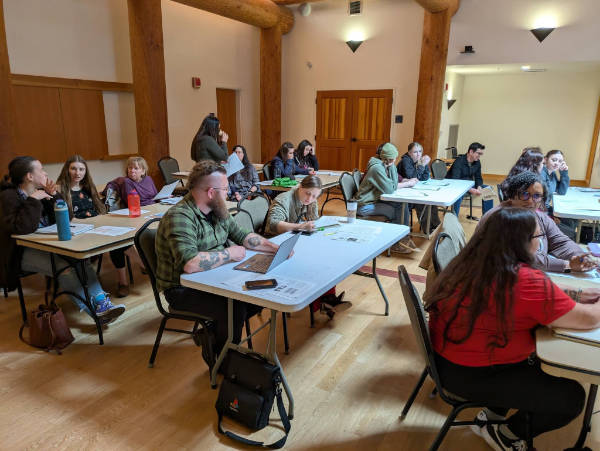
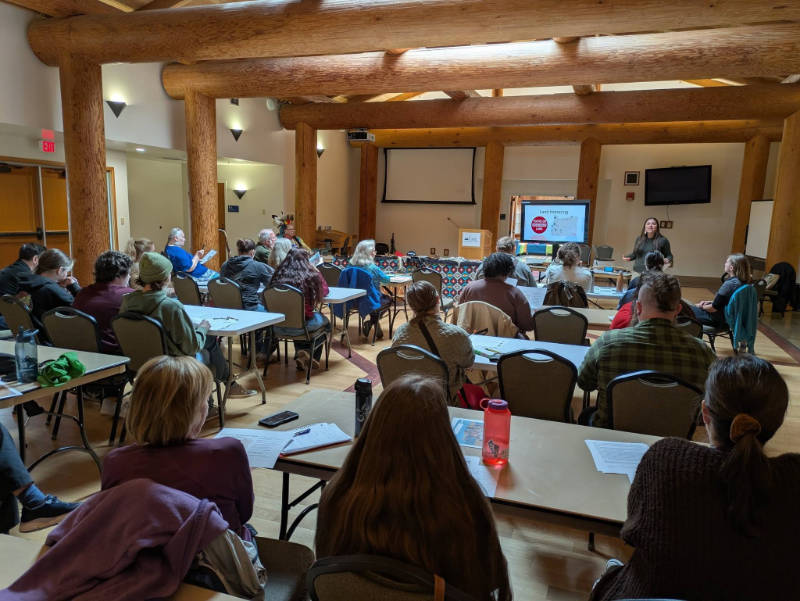
SCEC offered a teacher training on Monday April 13, 2026 at the LCC Longhouse in Eugene. It was well attended with 30 people coming to learn about Native culture and how to teach about it.
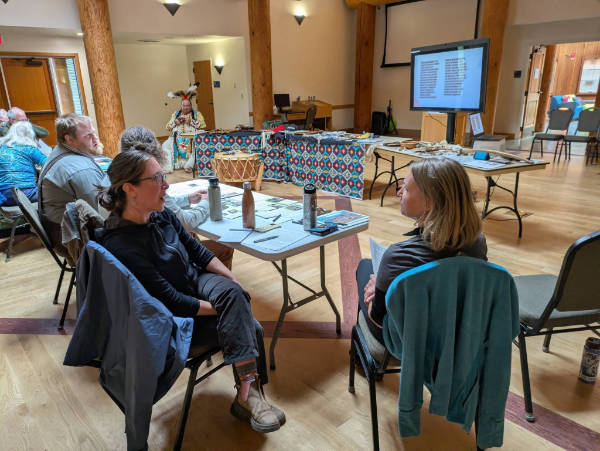
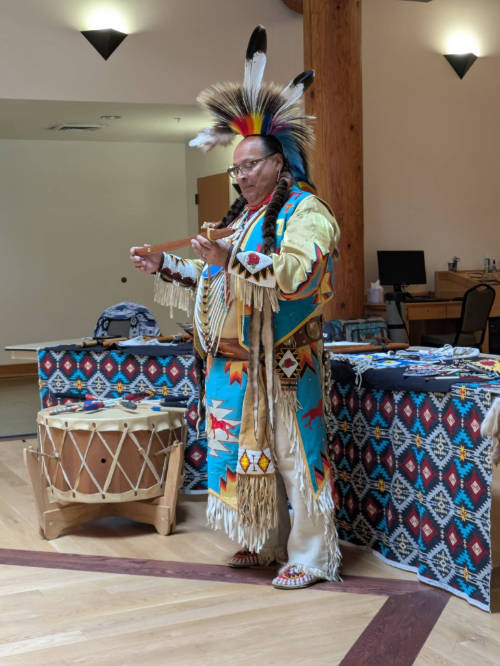
Participants experienced a slideshows presentation from Karen Rainsong, Executive Director of SCEC, a cultural presentation from Deitrich Peters (Grand Ronde) and an interactive learning session with Nicole Butler-Hooton (Siletz Tribe) of the Bethel School District.
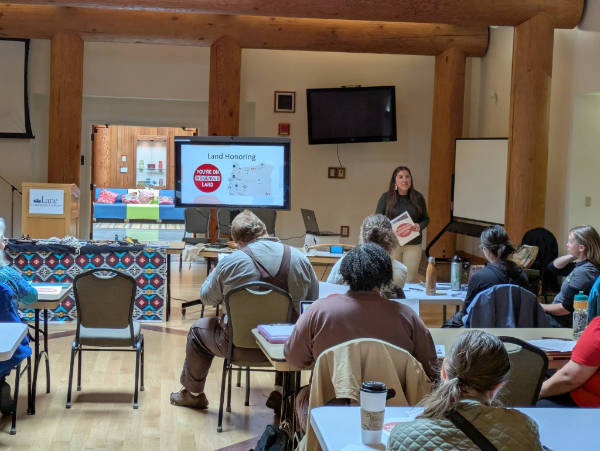
In Karen’s presentation, one of the central questions was how to teach about Native culture if you are not Native yourself. Her answer was that it can be done, but it must be done rightly. She laid out several principles such as: respectful and right intentions, well-researched content, contemporary Native voices and depictions, real connection to the tribes, talk about the “hard history”, permission and respecting boundaries, acknowledgement of personal bias, decolonization action, and ongoing professional development. Karen also gave a brief overview of the history of the Confederated Tribes of Grand Ronde, and spoke about land acknowledgements and the deeper action that should stem from them.
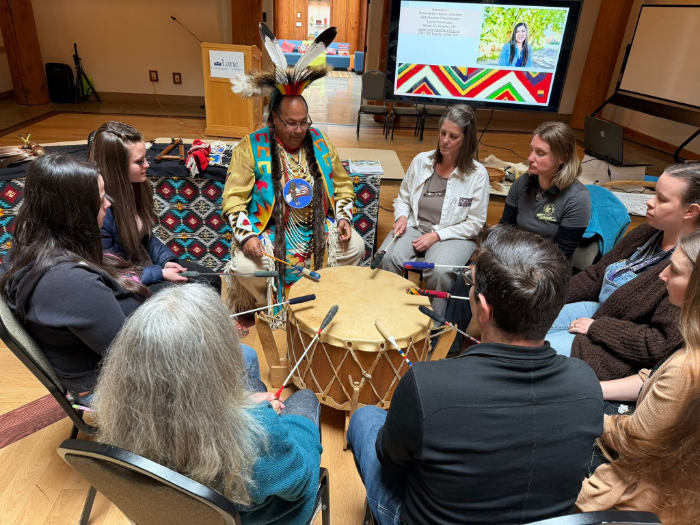
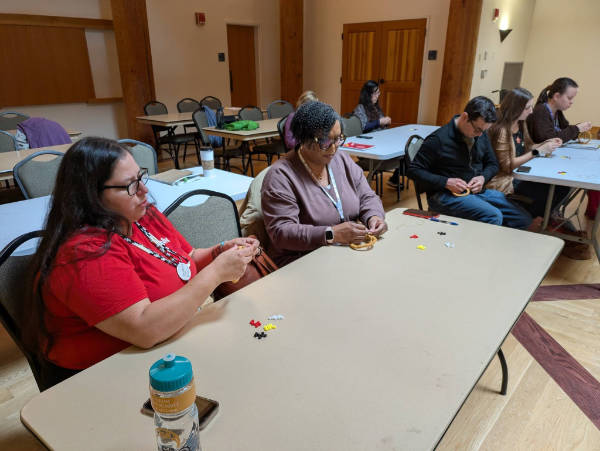
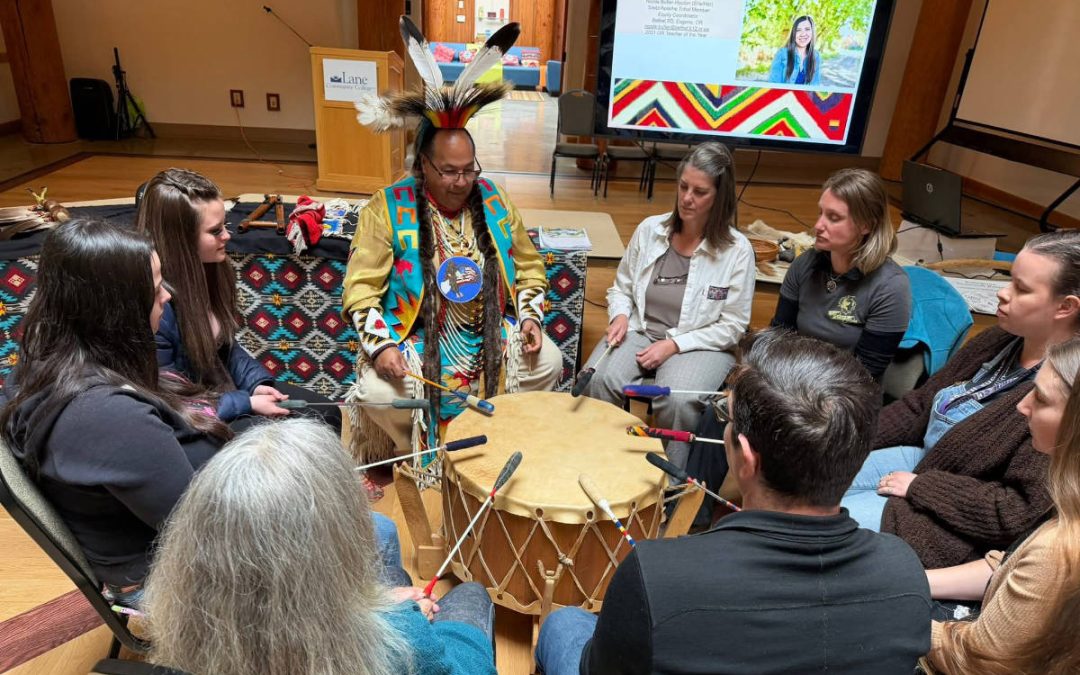
Then Deitrich Peters spoke about his culture, including about Eagle feathers, flutes, language, customs and his experiences growing up as an Indigenous person. Dietz also spoke about language loss. He said the language is going away as elders pass away, and that if you do not speak a language, you lose it. He talked about the effort to keep language alive through schools and recordings, and emphasized that it is important not merely to know a few words, but to learn the language fully. He spoke about the sacred importance of Eagle feathers, the process of acquiring them legally, and the significance of them. He played several beautiful songs on the flute and told stories. At the end of the day, Deitz led a medicine wheel craft where participants learned about the significance and made their own to take home. Several people got to play the big drum with Deitz, who shared the respect, prayers and meaning of the drum as the heartbeat of the Mother Earth. This portion of the day was especially significant to many people.
Nicole Butler-Hooton’s presentation centered around educational application and accountability. She spoke about helping students understand identity, Indigenous land, time immemorial, history, and tribal governments. She emphasized that we are always on Indigenous land and that it is important to intentionally show that Native people are still here.
Nicole also referenced Oregon’s Tribal History/Shared History framework. She spoke about sovereignty, tribal governments, and the six keys of critical orientation. She helped us distinguish between cultural appreciation and cultural appropriation, and had us discuss this at our tables. She described cultural appreciation as a respectful and genuine interest in learning about and understanding culture. She described cultural appropriation as rooted in colonialism- when traditions, symbols, words, and practices are taken and used by others without regard to Native communities.
One of the main themes of the day was: learning should change how we think, and how we think should change how we act.
The feedback was great with many participants saying they loved that there was a deeply personal cultural component combined with practical teaching strategies.
Taken together, Karen’s portion gave the framework, Dietz’s portion gave lived experience and cultural depth, and Nicole’s portion gave educational application and accountability. I noted these portions in my notes as Mind, Body, and Soul. Karen reflected on the Mind by putting definition to terms and outlining the understanding of the message. Deitz reflected on the Soul and spoke directly from his heart, speaking about his past and how it made him feel. Then Nicole represented the Body by putting our bodies to work with classroom worksheets and laying the final layer of this foundation. My overall takeaway is that respectful engagement with Indigenous history and culture requires more than admiration. It requires truthfulness, humility,
relationship, care, and most importantly action. If we are serious about responsible heritage work, then we need to let this kind of learning shape our language, our planning, our partnerships, and our decision-making.
From a synopsis by Matthew Hewlett who attended the training:
Most Important Takeaway Points
- Indigenous culture can be taught by non-Native people only when it is approached responsibly. That requires respectful intent, strong research, contemporary Native voices, real tribal connections, honesty about difficult history, respect for boundaries, and continued learning.
- Good education should correct assumptions and change practice. Decolonization requires more than language, and responsible learning should be allowed to reshape understanding, decisions, relationships, planning, and public engagement.
- Native people are still here, and tribes are living sovereign nations. Indigenous history should not be framed as something confined to the distant past. Tribal sovereignty, government relations, land management, economy, cultural practices, and Native presence all remain active in the present.
- Land acknowledgement should be meaningful. It should function as a way of resisting erasure and inviting truth and reconciliation, rather than serving as a hollow or performative statement.
- Language preservation is directly tied to cultural survival. A language cannot be preserved through admiration alone; it must be spoken, taught, and passed on.
- Native cultural items and practices carry deep meaning, protocol, and context. Feathers, dance items, flute-making, storytelling, drumming, songs, and ceremonies are not simply decorative or interchangeable programming elements, but purposeful traditions with boundaries, timing, and significance that should be respected.
- Cultural appreciation and cultural appropriation are not the same. Respectful learning is different from taking traditions, symbols, words, or practices out of context and using them without regard for Native communities.