
Who Cares About History?
How History Education Shapes our Democracy and our Future
By Karen Rainsong
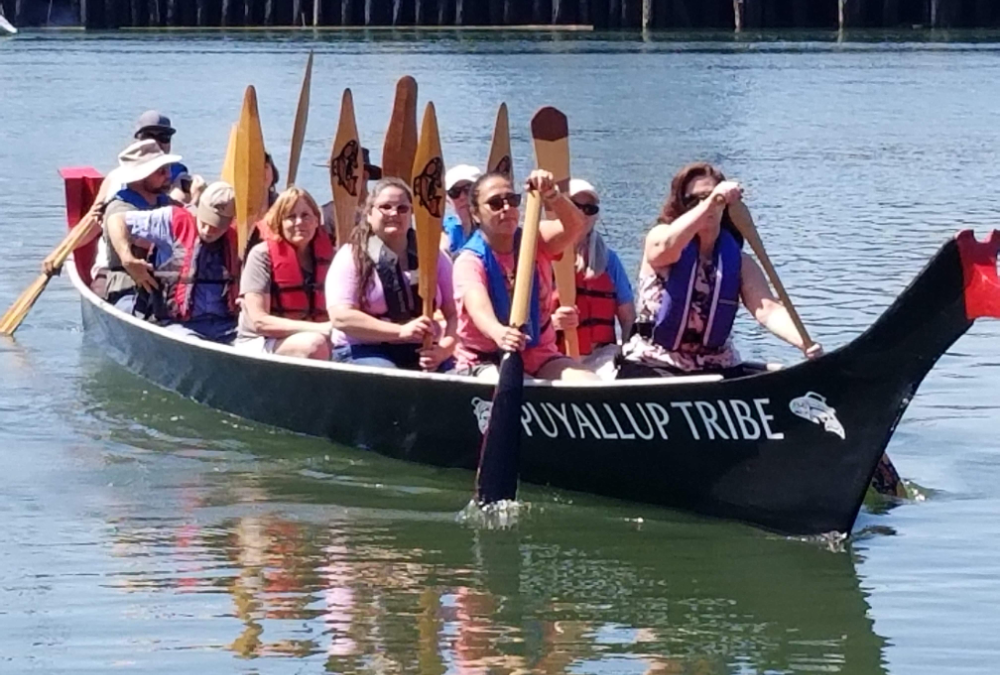
Featured image: Karen canoes with the Puyallup tribe in Puget Sound in 2022 during a history conference.
I have been teaching living history in Oregon for more than 20 years. I have seen people who are curious and thoughtful, and also encountered those who are closed and distrustful of ideas and representations that challenge their beliefs about Oregon’s past. With the 250th anniversary of the Declaration of Independence this year, I began considering why I do this work. Why do people go to historical events and museums? And if they don’t, why should they?
In a country that prides itself on innovation, speed, and the next big thing, history can feel like clutter—dusty textbooks, old arguments, names etched into stone. In a world of nonstop headlines and instant opinions, it’s tempting to ask why we should look backward at all. Why dwell on what’s over when the future demands so much attention?
For people who care about democracy, justice, and human dignity, the answer is that understanding history is not a luxury. It’s a responsibility.
History is the long memory of our moral experiments and our actions. It is how a society remembers what it celebrates and what it regrets. Every right many Americans now take for granted—free speech, voting, labor protections, civil rights—was once a radical demand, fiercely resisted by people who believed the status quo was natural and permanent. But with rights come responsibilities—to each other, to the natural world, and to learn from the past so we don’t repeat tragedies.
Take, for instance, the history of legal slavery in the United States. It was a central system that shaped American wealth, laws, politics, and social hierarchies. Millions of people were treated as property, denied freedom, family autonomy, education, and legal protection, all while this system was defended as normal, necessary, or even moral by respected leaders and many ordinary citizens.
Caring about this history is not about assigning personal guilt to people living today, it is about understanding cause and effect. The wealth created through forced labor, the laws designed to protect it, and the beliefs used to justify it did not disappear with emancipation. They transformed—into segregation, exclusion, and disparities that continue to shape American life. Ignoring that history doesn’t make these realities go away, it only makes them harder to confront.
The history of systemic oppression of Native Americans and other persons of color is important to talk about because the harm was real, deliberate, and its effects are still felt today. Remembering this history honors Indigenous peoples who were displaced, killed, and stripped of their land and culture, and prevents their suffering from being erased or minimized. It also helps explain how power, law, and “progress” have been used to justify historical and present-day inequities faced by many Native communities. An honest reckoning with this past strengthens democracy by grounding it in truth and accountability, making meaningful repair and a more just future possible.
History education also sharpens our ability to recognize patterns. Backlashes repeat. Scapegoats change names, but the logic stays familiar. Fear is redirected toward vulnerable groups. Leaders promise to restore a lost greatness that never quite existed. When you know history, these moves start feeling alarmingly predictable.
Just as importantly, history warns us about moral complacency. It’s comforting to believe that people in the past were obviously wrong and that we, by contrast, would have known better. But history shows that many who supported, tolerated or ignored injustice saw themselves as decent, patriotic, and reasonable. This turns the mirror back on us and forces uncomfortable questions: What injustices do we accept because they benefit us or feel normal? Whose suffering are we minimizing because it’s inconvenient to face?
History education also expands empathy. It asks us to encounter and consider lives unlike our own, and to grapple with choices we may never face. This perspective doesn’t excuse wrongdoing, but it deepens understanding of why historical abuses occurred. It helps elucidate how systems shape behavior—and why changing systems matters more than judging individuals. In an era of outrage and certainty, historical thinking slows us down, complicates our assumptions, and encourages listening over knee-jerk reactions.
It is crucial to have respectful conversations, though they can be difficult or uncomfortable, about our shared past and the repercussions of it today. It takes courage and tenacity to be open to changing our minds and expanding our point of view.
For a democratic society, this kind of thinking is essential. Democracies depend on informed citizens who can recognize recycled propaganda. When history is ignored or distorted, power fills the gap with nostalgia and myth. When history is faced squarely, it equips people to argue better, vote wiser, and imagine better futures for all.
History doesn’t trap us in the past; it exists to guide our choices now. It reminds us that the freedoms we enjoy were won by people who fought for them before our time—and that we are building a world for the generations to come. What we choose to remember, confront, or forget shapes the world and our concept of what it is to be an American.
So, who cares about history? The answer, I hope, is you.
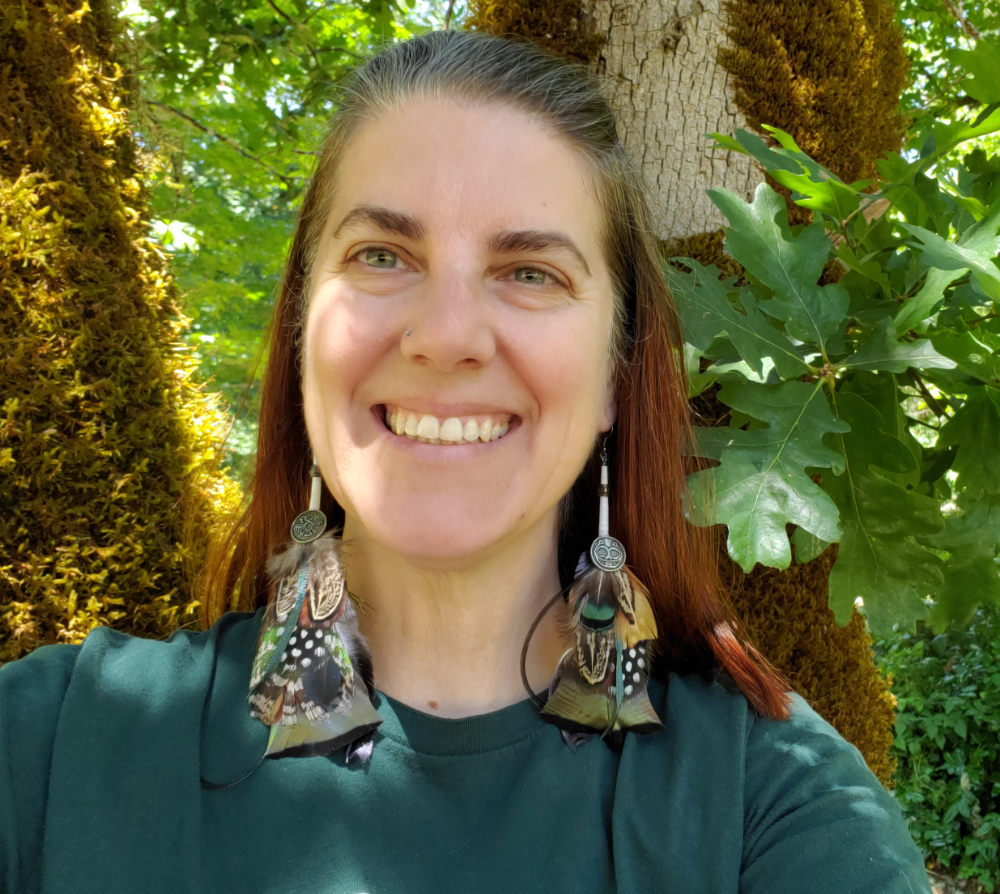
Karen Rainsong is the Executive Director of Singing Creek Educational Center, a nonprofit providing living history experiences for everyone. SCEC is located in Lane County, Oregon, where Karen has lived since 1995.